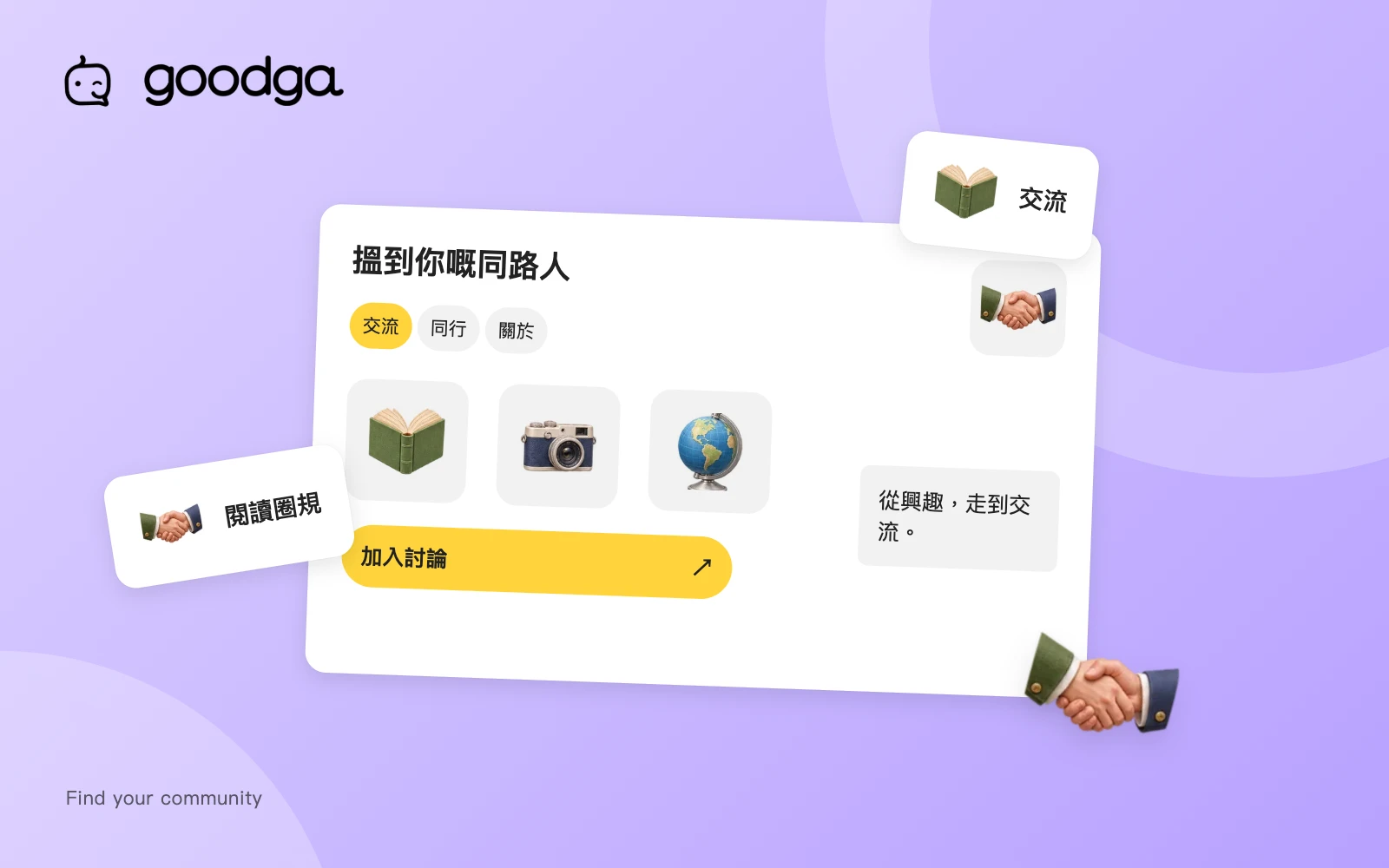
Communities are places to exchange ideas around shared interests. Read a circle's discussions before deciding whether to join. Reading alone does not automatically follow every post, so you can choose how involved you want to become.
Know the difference between a circle, a post and a plan
A circle supports ongoing conversation. A post may be a discussion, a question or a companion invitation. Companion invitations involve capacity, timing and applications, so they should not be treated as ordinary comments.
Read a circle's description, topics and rules before joining. Similar names do not guarantee the same focus. The tone and substance of recent discussions can tell you more than a membership number alone.
Read before starting a new discussion
Reading the original post and replies helps you understand the context and avoid repeating a question that has already been answered. If information may be out of date, explain what you want to verify rather than assuming an older answer remains current.
- Search for related discussions before posting.
- Respect the circle's rules and moderation arrangements.
- Do not copy private messages, closed-group conversations or another person's personal details into public posts.
Focus your first contribution on one thing
For a question, explain what you have tried, where you are stuck and what kind of response would help. For a contribution, distinguish personal experience, opinion and verifiable facts. Add a source when referring to external information.
You do not need to pretend to be an experienced member or invent a story to attract replies. A focused question with enough context is already a useful contribution.
Manage following and visibility
Posting or replying generally follows the discussion, while the platform respects an explicit decision to unfollow. Adjust follows and notification preferences if updates become distracting. Public member cards require an opt-in; joining a circle does not mean you must publicly display every participation detail.
Use the available moderation or reporting controls for inappropriate material. When disagreeing, respond to the idea and supporting evidence instead of making the discussion personal.
Take the next step
Visit Communities and begin with a topic you would like to keep exploring. Read the safety guide and privacy policy before participating. These platform pages currently use Traditional Chinese.
Prepared by goodga using the platform’s current features, with practical editorial guidance.